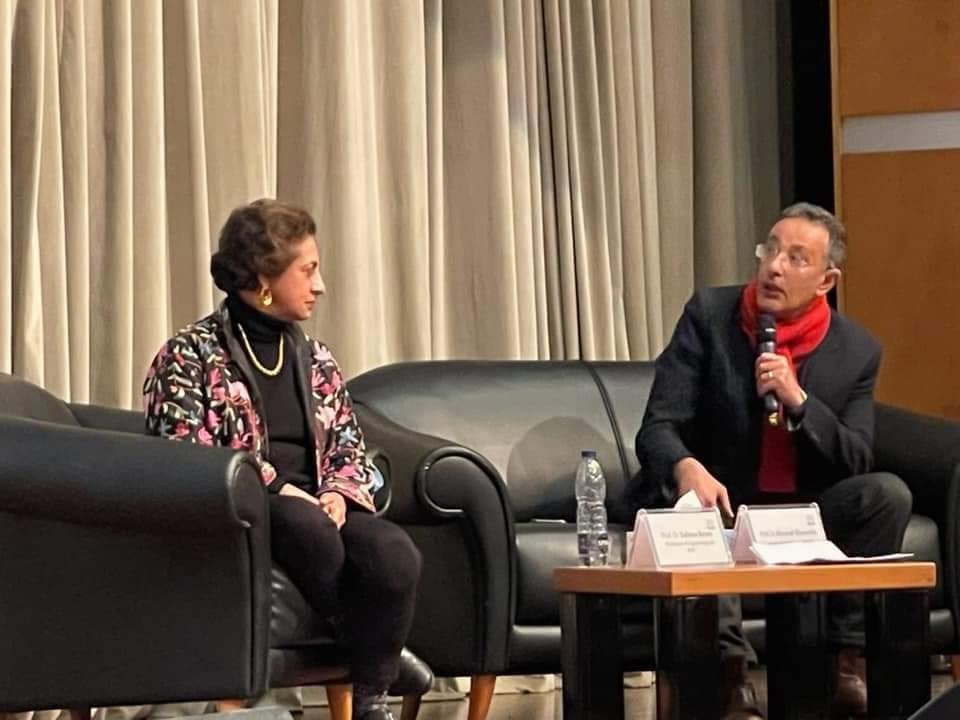
NMEC organized a scientific lecture delivered by the distinguished Egyptologist and AUC Professor of Egyptology; Dr. Salima Ikram, titled; “Egypt’s Royal Mummies: From Discovery To Display”

The National Museum of Egyptian Civilization organized a scientific lecture delivered by the distinguished Egyptologist and AUC Professor of Egyptology; Dr. Salima Ikram, titled; “Egypt’s Royal Mummies: From Discovery To Display”.
The lecture was attended by leading experts in the fields of Archeology, and officials such as British, Portuguese, and Canadian Ambassadors to Cairo, the Spanish Cultural Advisor, and the President of the European Development Bank. While the renowned Dr. Farouk El-Baz and Dr. Hani El-Noqrashi participated in the live broadcast on the museum’s social media platforms.
The lecture traces the history of the royal mummies from their inception, into their most recent incarnations in Egypt, highlighting their roles as grand historic figures, ambassadors for Egypt, political symbols, and nationalist icons.
Dr. Ikram explored as well as the evolving details of mummification over time, and the ancients’ beliefs of death, burial, and the afterlife. In addition, the lecture unveiled the royal mummies journey from their decade-old residence in the Egyptian Museum in Tahrir to their final destination at the National Museum of Egyptian Civilization in Fustat, in an extravagant parade that grabbed the world’s attention back in April, 2021.
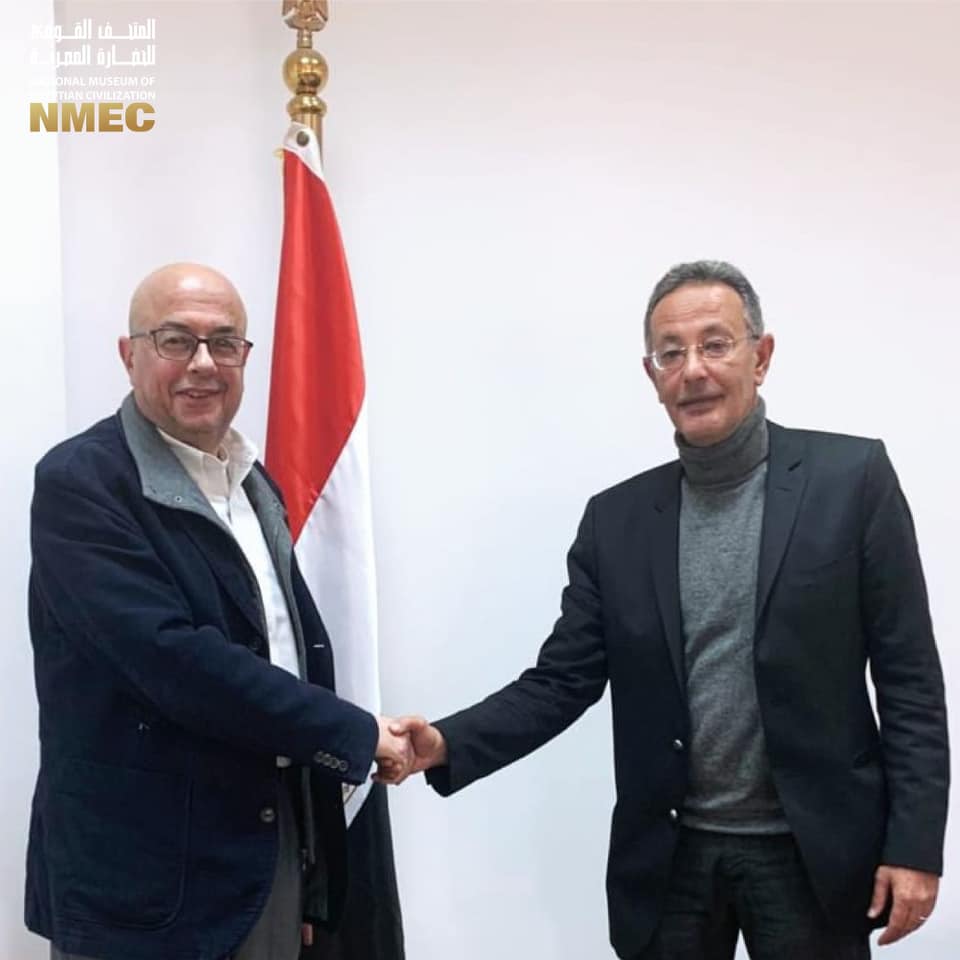
NMEC announces the release of a Mobile Application for the museum , in cooperation with IPMagiX

The National Museum of Egyptian Civilization announces the release of a Mobile Application for the museum , in cooperation with IPMagiX, that can be accessed by Google Play and App Store, as part of NMEC’s agenda to implement the latest technologies to enhance the museum experience.
Dr. Ahmed Ghoneim, Managing Executive Director of NMEC emphasized that the Mobile App aims at providing the ultimate guide to the Museum for visitors, as well as an in-depth information for those seeking more about the history of NMEC’s collections. In addition, the Mobile Application offers a general museum information; including the option to purchase tickets and hours of operation, as well as a list of the museum’s exhibits with photos and descriptions of important artifacts in its collection. It is worth mentioning that the Mobile application provides its users a self-guided tour at the museum building and its exhibition halls through the “Indoor Navigation” tool, that offers NMEC’s guests new ways to self-discover, and make the most out of their visit while onsite.

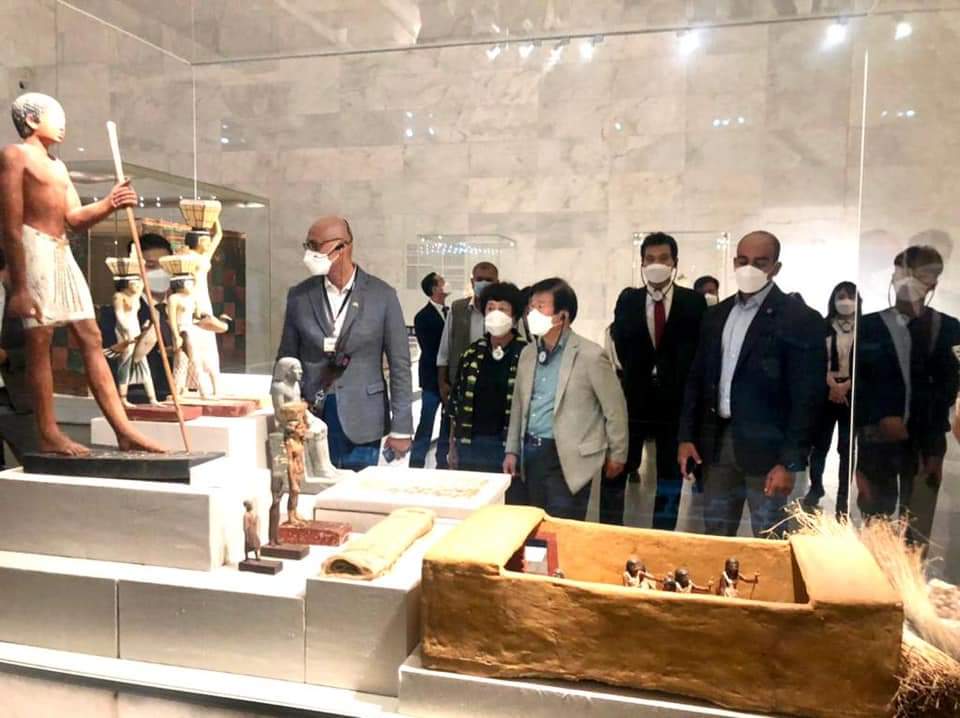
President of the National Assembly of the Republic of South Korea Byung-Seok Park and his accompanying delegation visited the National Museum of Egyptian Civilization, on the sidelines of his official visit to Egypt.

Continuing his tour of Cairo, President of the National Assembly of the Republic of South Korea Byung-Seok Park and his accompanying delegation visited the National Museum of Egyptian Civilization and the Complex of Religions, on the sidelines of his official visit to Egypt.
During their visit to NMEC, they were received by Dr. Ahmed Ghoneim, the Managing Executive Director of NMEC, where they toured the Core Exhibition Hall and the Royal Mummies Hall, which became the focus of the world’s attention and a source of attraction for visitors. The delegation was keen to visit the gift house in the museum, which displays the archaeological reproductions of the Kunooz Archaeological Factory. Moreover, the delegation toured the Complex of Religions in Old Egypt, where they visited the historic Abu Serga Church (the Cave Church), and listened to a detailed presentation of the history of the area and the restoration and development work that was carried out in it. At end of their visit, our guests have expressed their sincere admiration to the forms of tolerance presented throughout the various ages of Egyptian Civilization.

NMEC Summer School concludes its training program

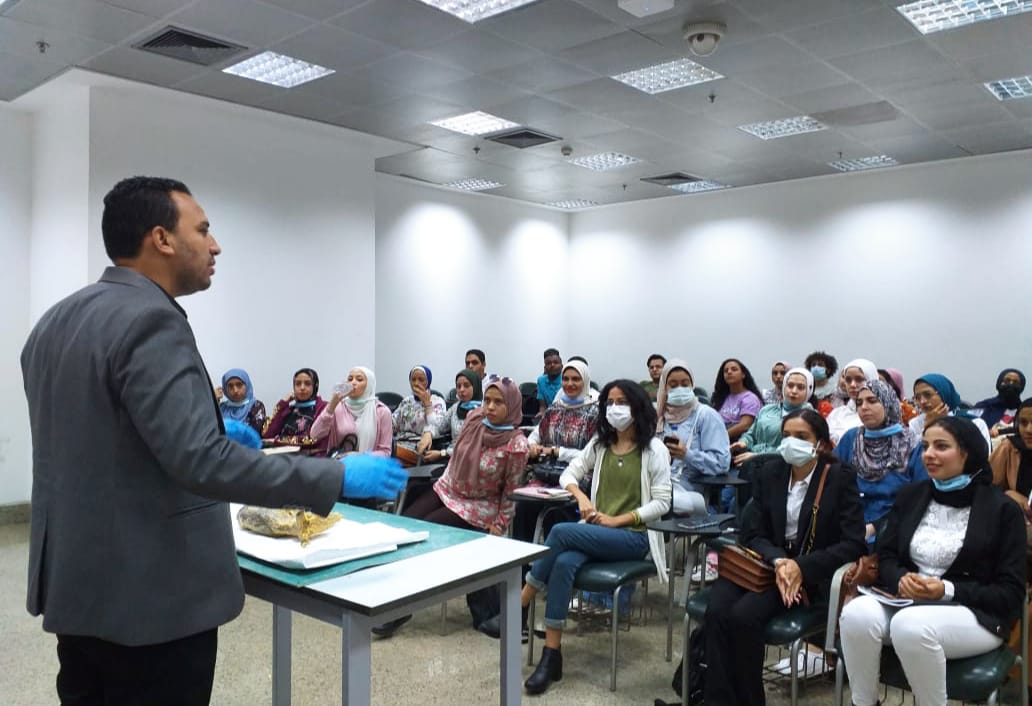
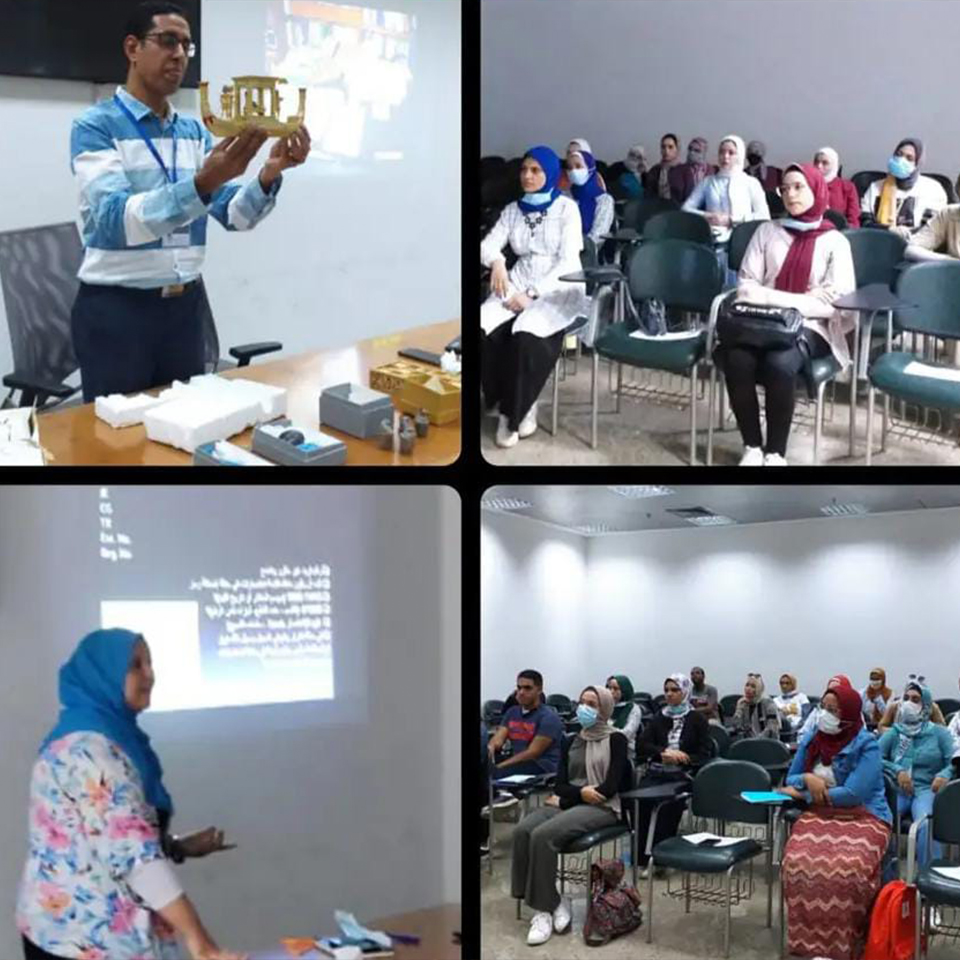
NMEC Summer School concludes its training program offered to the students and alumni of the Faculty of Archaeology in a number of Egyptian Universities.
Dr. Ahmed Ghoneim, Managing Executive Director of NMEC, emphasized that providing such programs is one of NMEC’s key responsibilities, as they develop the skills, and qualifications required to help the candidates grow both personally and professionally.
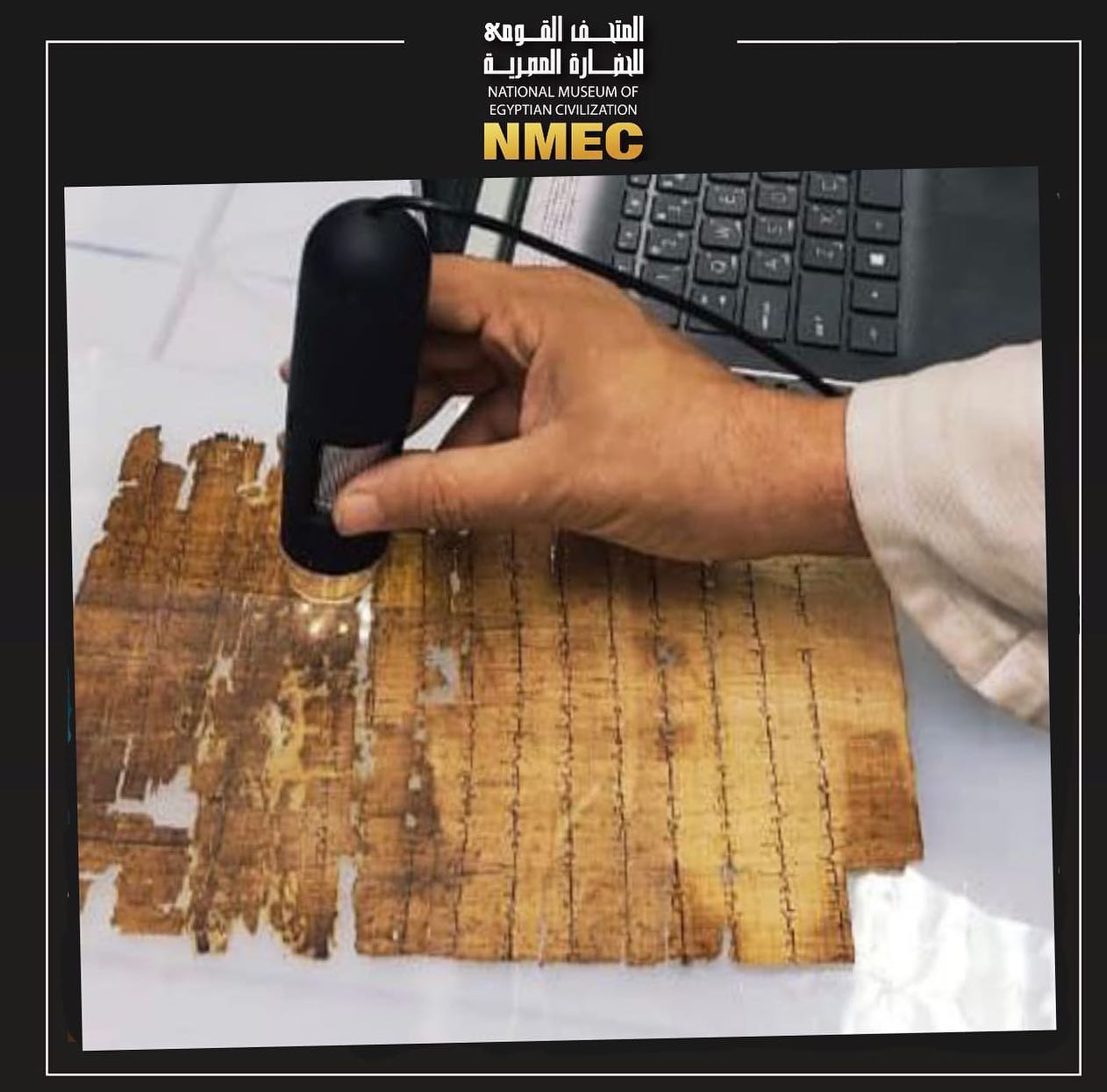
Lasted for two consecutive months, the intensive summer program has offered its fifty participants a comprehensive theoretical and practical approach to comprehend a number of major themes in the fields of Archeology, Museology, Conservation/Restoration, and Scientific Research, including, but not limited to; DNA research, radiocarbon dating, the study of human remains and the methods of identifying them, documentation and digital registration, the methods of preserving, treating and maintaining manuscripts, papyruses, leathers and baskets, as well as the best methods of storing and displaying the museum’s objects. Moreover, the program offered its students an inter-disciplinary, comprehensive scope of comprehending the theoretical and practical aspects of Museology.

A live workshop on the Art of “Wicker and Palm Leaves Weaving”

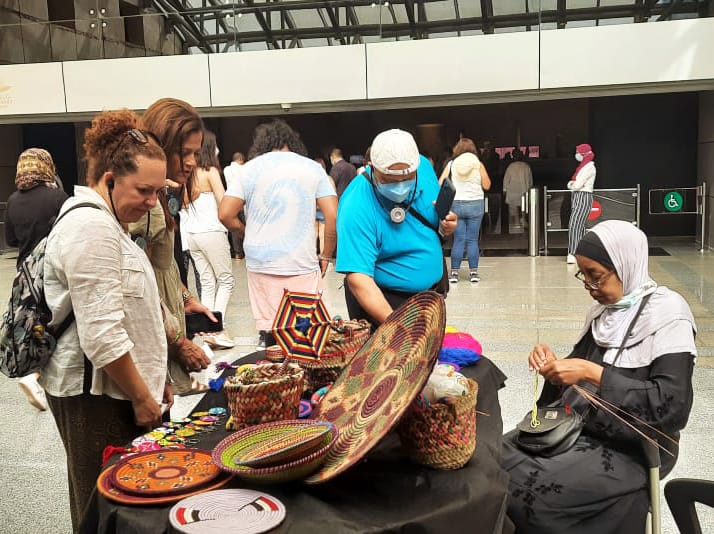
As part of NMEC’s responsibility to preserve and promote the tangible and intangible cultural heritage of Egypt, a live workshop was organized on Saturday, October 9th, 2021 on one of Egypt’s rural and most authentic forms of craft; “Wicker and Palm Leaves Weaving”, an industry that flourished in Nuba among other Egyptian regions such as Bahariya Oasis, Sinai, Upper and Lower Egypt governorates, where artisans produce aesthetically appealing, environmentally-friendly products using inexpensive materials such as; dry palm fronds.
Through the live workshop, NMEC’s visitors were offered a unique opportunity to examine one of the various forms of Egypt’s tangible cultural heritage. For instance, the workshop insighted the audience on the art of weaving palm fronds, as they have had an exclusive opportunity to meet a number of talented artisans and discuss topics such as the origins of such craft, the materials used and the techniques hired to manufacture wicker-related products.
Evidently, wicker and palm leaves weaving craft is common among local Egyptians, mainly women at the above mentioned regions, where they employ the environmental components around them such as palm fronds, to manufacture simple items that assist them in their daily lives, such as wicker baskets, mats, hats, among many others that are still present and used till today.
Dr. Ahmed Ghoniem, Managing Executive Director of NMEC, highlighted that conducting such events is an essential component of NMEC’s mission to preserve and promote the tangible and intangible cultural heritage of Egypt. The event has witnessed a remarkable interaction among the museum’s national and international visitors, and it was concluded by presenting the participating artisans certificates of appreciation by NMEC’s Managing Executive Director; Dr. Ahmed Ghoniem.

The National Museum of Egyptian Civilization continues its training program (NMEC Summer School) for students of all departments of faculties of Archaeology

The National Museum of Egyptian Civilization continues its training program (NMEC Summer School) for students of all departments of faculties of Archaeology
Trainees received a lecture on Ancient DNA research in archeology was conducted by Prof. Dr. Yahya Gad, DNA professor at the National Research Center. They also visited the DNA laboratory at the National Museum of Egyptian Civilization and listened to a detailed explanation about its equipment and significance. They then visited the Carbon dating Laboratory and listened to a full explanation from Mohamed El-Gharbawy, the laboratory director on Carbon dating uses in the field of archeology.
Also, students listened to a lecture on the study of human remains and ways to identify them from Safa Gharib, a human remains specialist at the National Museum of Egyptian Civilization, also they learned about digital documentation and registration and its important role in preserving artifacts by Fatma Bakar, Director of Digital Documentation centre at the NMEC. They also knew about the creation and development of museums from Mahrous Al-Sanadidy, the supervisor of the temporary exhibition hall at the NMEC, also listened from Sahar Abdel Rahman, the director of the Small Stones storage and the director of the library at The NMEC about the importance of Communication in the Authenticity of Artefacts , also Sayed Abu Al-Fadl, The supervisor of Archaeological Affairs at the NMEC gave a lecture about he most important objects of Egyptian civilization displayed in international museums. Trainees also received lectures about the Scientific methods of examination to identify the different plants fibers by Naglaa gomaa, a textiles restoration specialist, also Somya Abdel-Khaliq, the head of the textile conservation lab addressed the issue of the textiles restoration and the ancient pigments and methods to be prepared and applied to various textiles fibers.
Mona Fathi and Said Zeidan, manuscripts conservators, also gave practical training to students on methods of treating and preserving manuscripts, whether made of paper or papyrus.
Also, Ayman Khaled, a specialist in conservation of manuscripts , explained the different methods of treating and conserving leather, also trainees took theoretical lectures and practical training on the treatment and preservation of basketry by Shereen Abd Elraouf, Textile conservator, and the week concluded with practical training on the cleaning methods and completing techniques of the wooden objects by Islam Tokal, head of the wood conservation lab., Shourouk Solyman, Mayada Saeed and Ahmed Ali, wood conservators.
It is worth noted that the training program organized by the National Museum of Egyptian Civilization has started its activities on the eleventh of this August


Takfit or Niello is a clear evidence of Egyptians’ ability to stand the test of time and well-preserve such forms of tangible heritage.

Egypt has long been a hub for various cultural and artistic expressions, and Egyptians have always demonstrated notions of openness, acceptance and tolerance towards all artistic forms, and have as well integrated expatriated arts with original, local elements. Takfit or Niello is a clear evidence of Egyptians’ ability to stand the test of time and well-preserve such forms of tangible heritage.
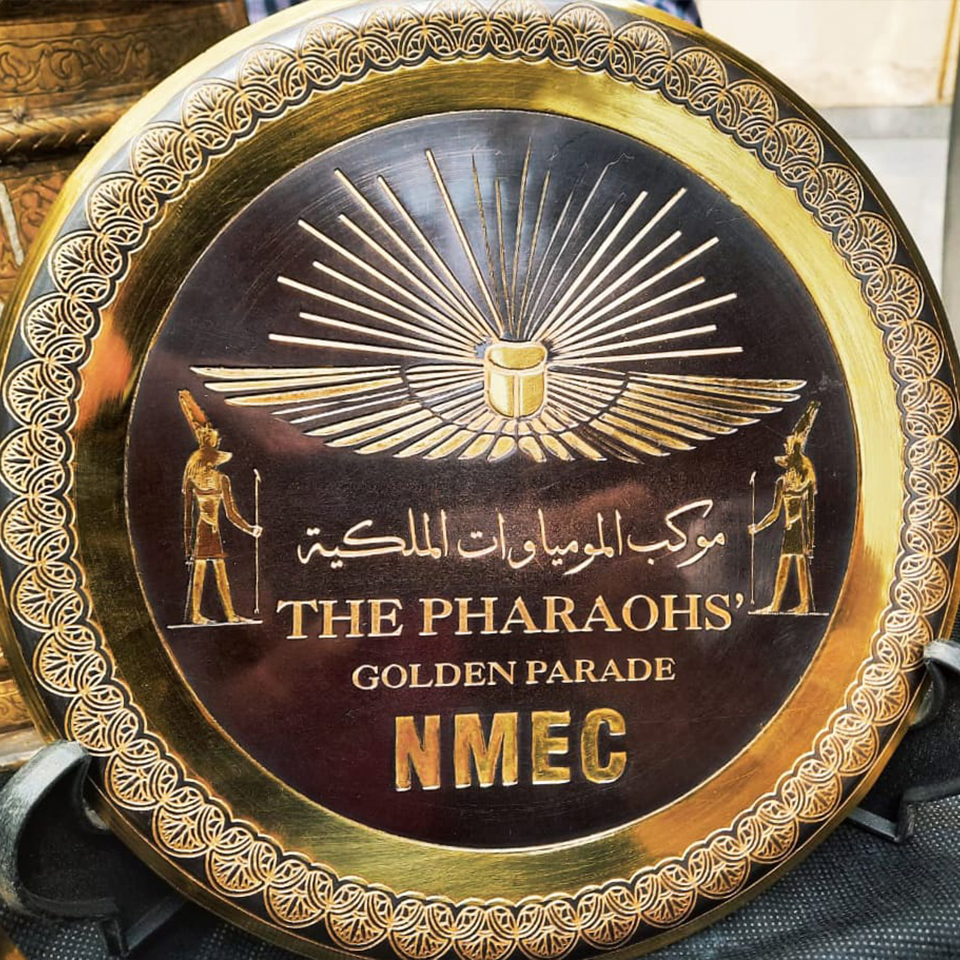
The craft of Takfit or Niello is considered as one of the most prominent form of metal-engraving, and one of the oldest artistic forms known to Egyptians as it dates back to the Mamluks era. For instance, artists have excelled in Takfeet as they were able to transform a cheap metal such as copper, into a precious piece of art, using primitive materials as hammers.
The National Museum of Egyptian Civilization organized an exclusive, live workshop to handcraft of Takfit, in the presence of one of the pioneer families who worked in such profession for generations, and sought to develop it, preserve it and promote it.
The event has witnessed a remarkable interaction among the museum’s national and international visitors, especially the youth, who were keen to follow up on the live work and document it on social media.

NMEC Summer School

For the third week in a row, the National Museum of Egyptian Civilization in Fustat resumes its summer training program for the undergraduates and postgraduates of the Faculty of Archeology in its various departments, mainly; Egyptian Antiquities, Islamic Antiquities and the Conservation Department. As announced earlier by Dr. Ahmed Ghoneim, the Managing Executive Director of the NMEC, the training program serves the NMEC’s initial role of pursuing a greater role within the society other than housing antiquities, it is rather a comprehensive scientific and an educational institution. Ghoneim has emphasized that organizing internships and training programs is an asset, as such programs develop the skills, qualities, and abilities required that will help the candidates grow both personally and professionally.
Fayrouz Fekry, the Deputy Director for Management and Operation at the NEMC, demonstrated that the training program covers a number of major themes in the field of archeology, including, but not limited to; DNA research, radiocarbon dating, the study of human remains and the methods of identifying them, documentation and digital registration, the methods of preserving, treating and maintaining manuscripts, papyruses, leathers and baskets, as well as the best methods of storing and displaying them.
It is worth-noting that the training program will resume until the first week of October.

The National Museum of Egyptian Civilization exhibits a selected number of accessioned objects that document the earth-shattering event of “Pharaohs’ Golden Parade”

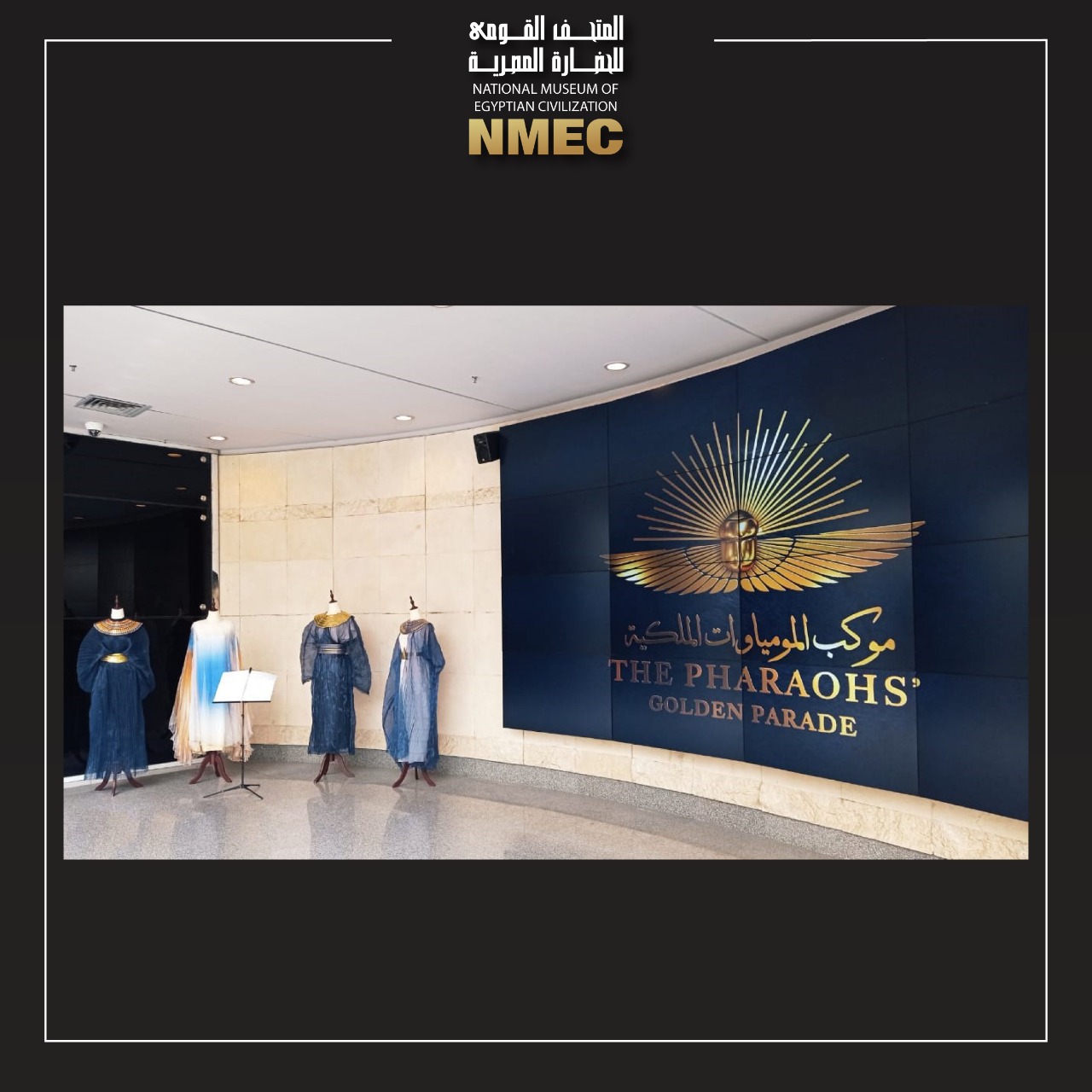
The National Museum of Egyptian Civilization exhibits a selected number of accessioned objects that document the earth-shattering event of “Pharaohs’ Golden Parade”.

In commemoration of the grand parade that was held in April earlier this year, the National Museum of Egyptian Civilization in Fustat exhibits at entrance of the Core Exhibition Hall four objects including; the garments and accessories worn by the show’s performers as well as the sheet of the musical composition along with the Maestro’s baton.

Dr. Ahmed Ghoneim, the Managing Executive Director of the Authority of the NMEC, highlights that displaying such objects comes within the new approaches proposed by the NMEC’s team, that aim to enrich and develop the museum’s narrative, as well as to commemorate the event of the Golden Parade. Ghoneim emphasizes that this approach will increase the number of visitors, especially those who keenly watched the show and those whom are interested in fashion.

Many visitors have expressed their excitement towards this addition, as they were keen on taking photographs to commemorate their memorable trip to NMEC.

It is worth mentioning that the NMEC has received from the Egyptian Museum in Tahrir, twenty-two royal mummies of Kings and Queens that were transferred to the NMEC in Fustat in a ground-breaking parade. In a special gesture, the museum has kept the event’s  billboards to encourage their audience to take photos, remember the exceptional event, and to commemorate their visit to the NMEC.

The National Museum of Egyptian Civilization in Fustat has welcomed a delegation of Arab bloggers and social media influencers

The National Museum of Egyptian Civilization in Fustat has welcomed a delegation of Arab bloggers and social media influencers who paid a visit to a number of Egyptian governates such as Cairo, Alexandria, and the Red Sea to promote Egypt as a travel destination.
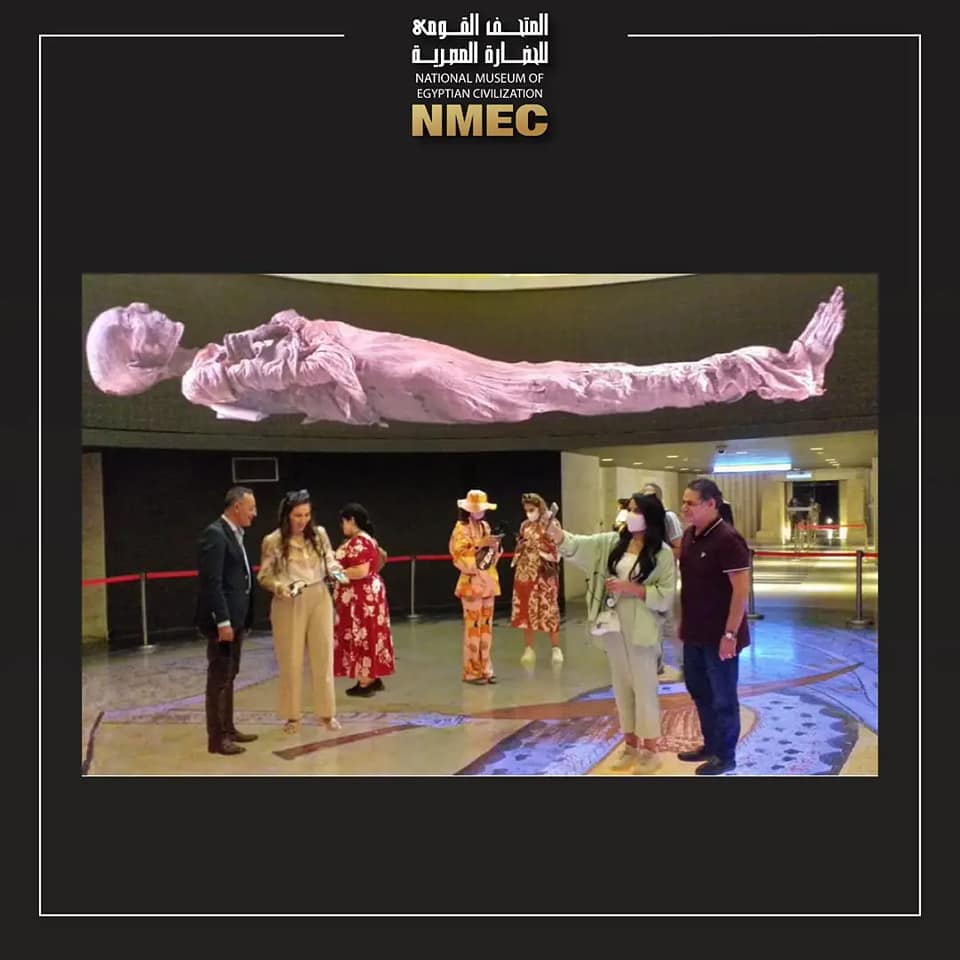
During their tour in Cairo, the influencers were keen on visiting the NEMC to see the museum’s exquisite collection as well as the Royal Mummies Hall, especially after the grand parade that was held in April, earlier this year.
The delegation was received by Dr. Ahmed Farouk Ghoneim, the Managing Executive Director of the NMEC, accompanied by Mr. Ahmed Youssef, the CEO of the Egyptian Tourism Promotion Board, were they have toured the museum’s halls such as the Core Exhibition Hall, and the Royal Mummies Hall to get acquainted with is distinguished artifacts. Our guests have expressed their delightfulness with their overall experience at the NMEC, highlighting their admiration towards the uniqueness of Egypt’s Civilization that is well-expressed through the museum’s rich collections.
The social media influencers were keen on taking photograghs for their memorable trip to NMEC in front of the Pharaoh’s Golden Parade boards which were kept by the museum in commemoration of this exceptional celebration that attracted all countries of the world, and posted them on their pages on various